
Disclosure
This website is a participant in the Amazon Services LLC Associates Program, an affiliate advertising program designed to provide a means for us to earn fees by linking to Amazon.com and affiliated sites.
A defective gecko thermostat can be identified by checking whether the heat source stays on constantly, never turns on, or shows a temperature reading that does not match a separate thermometer.
I always keep a second thermometer inside the enclosure to compare readings. If the numbers drift apart by more than a few degrees, or the heat never shuts off, the thermostat is likely faulty and needs replacing.
Stop Guessing at Bad Heat
A thermostat that drifts or dies can cook your gecko or leave it too cold. I checked temps by hand for weeks, chasing numbers that kept changing. The REPTITRIP Reptile Thermostat Day-Night Light Timer holds steady temps and runs your day and night lights on schedule, so the guesswork stops.
This is the one I use now, and it ended the temperature swings that drove me crazy: REPTITRIP Reptile Thermostat Day-Night Light Timer

- Socket S1 turns on and off according to the set time. Socket S2 turns on and off based on the set...
- Timer & Thermostat: Reptile thermostat, equipped with two independently operating sockets. Socket S...
- Timing Mode: The reptile thermostat is equipped with three customizable timing programs for Socket...
Why a Faulty Gecko Thermostat Is More Than Just a Minor Annoyance
A broken thermostat is not just a small tech problem. It can hurt your reptile, waste your money, and keep you up at night checking temps. In my experience, this is one of the most stressful things a keeper can face.
I learned this the hard way with my first leopard gecko. The thermostat got stuck on full heat overnight, and by morning the warm hide was dangerously hot. My gecko was sluggish and hiding, and I felt awful for not catching it sooner.
How an Unstable Thermostat Harms Your Gecko’s Health
Geckos cannot control their own body temperature. They rely on you to get the heat right, every single day. When the thermostat fails, their health can slide fast.
- Overheating can cause burns, dehydration, and heat stress.
- Underheating slows digestion and weakens the immune system.
- Wild swings in temperature lead to stress and lost appetite.
Why You Might Waste Money on the Wrong Fix
When temps look off, many of us blame the heat mat or bulb first. We buy replacements that were never the problem. In my experience, the thermostat is the culprit more often than people think.
That means real money spent on parts you did not need. It also means more days of unstable heat for your gecko. Testing the thermostat first saves both.
The Emotional Toll of a Thermostat You Cannot Trust
There is a quiet worry that comes with a thermostat you cannot trust. You check the tank before work, after dinner, and again at midnight. It wears you down.
Getting a clear answer about whether the device is faulty gives you back your peace of mind. That matters just as much as the temperature itself.
Simple Ways to Test a Gecko Thermostat at Home
You do not need fancy tools to check if your thermostat is working. A second thermometer and a little patience will tell you most of what you need to know. Here is what has worked for us.
How to Test Thermostat Accuracy With a Second Thermometer
Place a trusted digital thermometer right next to the thermostat probe. Let everything settle for about an hour before you compare. If the readings differ by more than a few degrees, something is off.
I do this test every few months now. It takes almost no effort and catches small drifts before they become big problems.
Signs Your Gecko Thermostat Probe or Sensor Is Failing
Sometimes the thermostat itself is fine and the probe is the real issue. A damaged or misplaced probe sends bad data to the unit. Watch for these warning signs:
- The heat source never turns off, even when temps climb.
- The heat source never turns on, even when temps drop.
- The display flickers, freezes, or shows odd numbers.
- Clicking sounds happen constantly with no heat change.
When to Replace a Faulty Gecko Thermostat
If your tests keep failing, stop trying to fix it. A thermostat that cannot hold steady temps is a risk you should not take. Replacing it is usually cheaper than treating a sick gecko.
Trust your gut here. If you cannot relax because the temps keep drifting, that alone is a good reason to swap it out.
You lie awake worrying the heat will spike while you sleep, and one bad night could hurt your gecko. You deserve gear you can actually trust, so do what I did and grab the thermostat I finally trusted for my own setup:

- ✓ EFFORTLESS SET UP: Easily program your desired temperature or switch between Fahrenheit and...
- ✓ EASE OF MIND: Our digital temperature controller features a convenient hanging tab and a bright...
- ✓ RUGGED CONSTRUCTION: This thermostat plug outlet is built for durability and features a sensor...
What I Look for When Buying a Gecko Thermostat
After replacing a few bad units, I stopped shopping by price alone. Here are the four things I check before I buy any thermostat for my geckos.
Accurate Temperature Control You Can Actually Verify
The thermostat has to hold temps within a degree or two of what you set. I always cross-check with a separate thermometer after setup. If it drifts right out of the box, it goes back.
Reliable Probe and Sensor Quality
The probe is the part that touches your heat source, so it takes a beating. A sturdy, well-sealed probe lasts far longer than a flimsy one. I look for probes with a decent cable length too, so placement is easy.
Safety Features Like Auto Shutoff
Good thermostats cut power if something goes wrong. This one feature can save your gecko from a dangerous heat spike. In my experience, it is worth paying a little more for that peace of mind.
Easy Setup and Clear Display
You should be able to set your target temp in under a minute. A bright, readable display helps when you are checking temps late at night. Complicated menus just make mistakes more likely.
The Mistake I See People Make With a Defective Gecko Thermostat
The biggest mistake I see is blaming the heat mat or bulb instead of the thermostat. People swap out the cheap part first, but the thermostat is usually the real problem. I made this exact error myself.
Here is what to do instead. Test the thermostat on its own before you buy any replacement parts. Set it to a target temp, watch it for an hour, and compare with a second thermometer.
If the heat source runs nonstop, never kicks on, or the readings drift, the thermostat is the culprit. Replace it first, not the mat or bulb. That one change saves you money and stress.
You keep second-guessing every temp reading, terrified the heat will spike while you are asleep. You just want to stop worrying and know your gecko is safe. That is exactly why I switched to what finally worked for my setup:
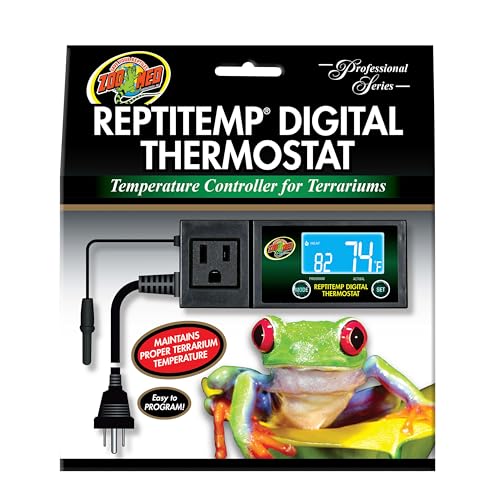
- Temperature control range: 50F to 122F. Controls Temperature by turning on heating devices in HEAT...
- Remote Temperature Sensor with 6 foot cable.
- Controls up to 600 watts of heating devices. Controls up to 150 watts of cooling devices.
Keep a Simple Temperature Log to Catch Problems Early
Here is the tip that changed everything for me. Write down your thermostat reading and your backup thermometer reading once a day. It sounds too simple, but it works.
I use a tiny notebook I keep right next to the tank. Each morning I jot down the time, the two temps, and anything odd I noticed. After a week or two, patterns start to jump out at you.
That is how I caught my last failing thermostat. The numbers looked fine day to day, but over ten days the gap between the two readings slowly grew. No single moment felt alarming, yet the trend was obvious in writing.
A log also helps you spot seasonal shifts, like a room getting colder in winter. You can adjust before your gecko feels it. Give it a try for two weeks and see what you learn.
My Top Picks for How to Tell if a Gecko Thermostat Is Defective
REPTIZOO Dimming PID Thermostat for Reptile Heat Lamps — The One I Trust for Steady Heat
The REPTIZOO Dimming PID Thermostat is the unit I reach for when I want smooth, precise heat control. I love that it dims the lamp instead of clicking it on and off, which keeps temps stable. It suits keepers running heat lamps who want tighter control.
The trade-off is the higher price.

- 【Dimming Reptile Thermostat】The dimming thermostat is a very accurate temperature control...
- 【Safety & Reliable】This temperature controller has highly accurate & precise sensor which can...
- 【Easy to Use】Double-press the 'SET' button to turn on/off the thermostat. Simply put in the...
Zoo Med ReptiTemp Digital Thermostat for Reptiles — My Simple, Budget-Friendly Backup
The Zoo Med ReptiTemp Digital Thermostat is what I recommend for beginners on a budget. I like how easy it is to set a target temp and forget it, and the display is clear. It fits keepers with a single heat mat who want something reliable.
It only handles on and off control, not dimming.
- Temperature control range: 50F to 122F. Controls Temperature by turning on heating devices in HEAT...
- Remote Temperature Sensor with 6 foot cable.
- Controls up to 600 watts of heating devices. Controls up to 150 watts of cooling devices.
Conclusion
The most important takeaway is simple: test your thermostat with a second thermometer before you blame anything else.
Go grab a thermometer right now and compare it to your thermostat reading — it takes five minutes, and it might be the reason your gecko’s temps never feel quite right.
Frequently Asked Questions about How to Tell If a Gecko Thermostat is Defective?
How do I know if my gecko thermostat is broken or just set wrong?
If the heat source runs nonstop or never turns on, the unit is likely broken, not just misconfigured. A wrong setting usually still holds some steady temperature.
Check your target temp first and watch for an hour. If the reading never matches, the thermostat is the problem. My rule is simple: if it cannot hold steady, it is faulty.
Can a faulty thermostat hurt my gecko overnight?
Yes, an overnight heat spike can cause burns, dehydration, or serious heat stress within hours. Geckos cannot escape a runaway heat source on their own.
That is why I always test new units before trusting them. A second thermometer next to the probe gives you a fast warning. If the temps climb past your setting, unplug it right away.
What is the best thermostat for someone who needs reliable heat control without constant checking?
A dimming PID thermostat is the best choice because it holds temps within about one degree instead of clicking on and off. That steady control means far less daily worry.
I recommend the REPTIZOO Dimming PID Thermostat for this exact reason. It is what finally worked for my setup after two cheaper units failed me.
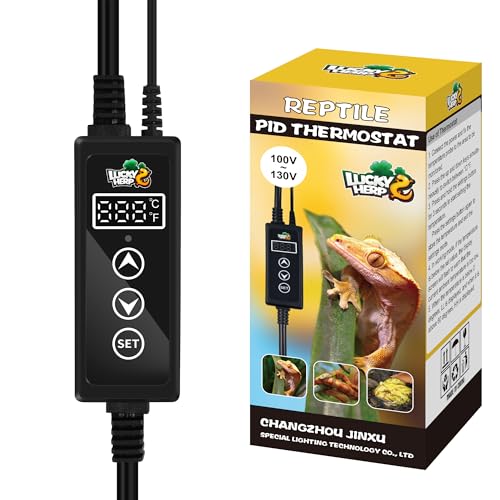
- 【Reptile Dimming Thermostat】LUCKY HERP reptile dimming thermostat adopts precise PID thermostat...
- 【Good for Reptile Health】All types of reptile pets, such as bearded dragons, lizards, ball...
- 【Easy to Operate】Simply fix the temperature probe to the area to be monitored, connect the...
How often should I test my gecko thermostat?
You should test your thermostat at least once a month with a separate thermometer. Small drifts build up slowly and are easy to miss day to day.
I also test any new unit right out of the box. A quick hourly check catches defects before they ever reach your gecko. It takes minutes and saves a lot of stress.
Which thermostat won’t let me down when I need something simple and affordable?
The Zoo Med ReptiTemp Digital Thermostat is a solid pick for simple, budget-friendly control. It handles basic on and off heating without complicated menus.
It suits keepers running a single heat mat who want something dependable. I suggest it to friends starting out, and it is the one I sent my sister to buy for her first setup.

- Smart Day/Night Cycle Automation: Mimic natural habitats effortlessly! Program separate day & night...
- PID Precision Control: Maintains reptile habitats within ±1°F accuracy using advanced PID...
- Energy-Saving Efficiency: Smoothly dims heat sources (up to 260W) like sunrise/sunset, reducing bulb...
Should I replace the thermostat or the heat mat first?
Replace the thermostat first, because it is the most common failure point in a heating setup. Heat mats and bulbs usually last far longer than the controller.
Test the thermostat on its own before buying anything else. If it fails the hourly check, swap it out. That order saves you money and fixes the real problem faster.