
Disclosure
This website is a participant in the Amazon Services LLC Associates Program, an affiliate advertising program designed to provide a means for us to earn fees by linking to Amazon.com and affiliated sites.
A gecko thermostat switches on and off rapidly when the temperature sensor sits too close to the heat source, causing short heating cycles. This rapid cycling is called short-cycling, and it happens whenever the probe reads small, fast temperature swings instead of the true tank temperature.
I learned this the hard way when my leopard gecko’s mat clicked every few seconds. Moving the probe to the warm hide floor, not the mat surface, fixed it in one afternoon. A faulty probe or an undersized heat source can cause the same rapid switching.
Stop The Thermostat Clicking
An on/off thermostat lets heat swing too far before it reacts, so the lamp clicks constantly and your gecko feels every spike and dip. The LUCKY HERP Reptile Dimming Thermostat PID Heat Lamp dims the bulb smoothly instead of cutting power, holding a steady temperature and ending that rapid switching for good.
This is the one I use in my own gecko tanks to stop the clicking: LUCKY HERP Reptile Dimming Thermostat PID Heat Lamp
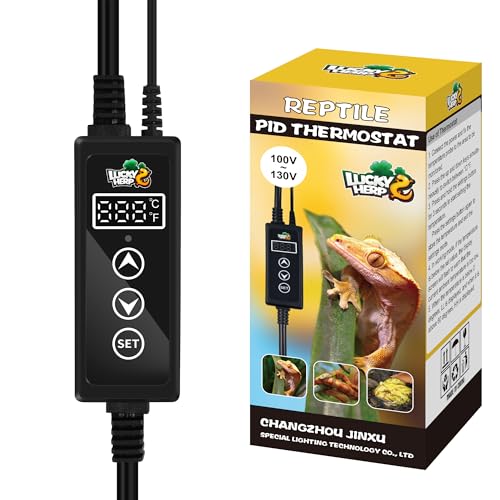
- 【Reptile Dimming Thermostat】LUCKY HERP reptile dimming thermostat adopts precise PID thermostat...
- 【Good for Reptile Health】All types of reptile pets, such as bearded dragons, lizards, ball...
- 【Easy to Operate】Simply fix the temperature probe to the area to be monitored, connect the...
Why Rapid Thermostat Cycling Is Bad for Your Gecko
Rapid on-off cycling is more than an annoying clicking sound. It can stress your gecko and wear out your heating equipment faster than normal use. In my experience, this problem sneaks up on you before you notice anything wrong.
Why Short-Cycling Stresses Your Gecko
Geckos need steady warmth to digest food and stay healthy. When the heat flips on and off every few seconds, the temperature swings up and down instead of holding steady. My son’s gecko stopped eating for a week because the tank never felt warm enough to digest properly.
That kind of stress adds up. A gecko that cannot thermoregulate well may hide more, eat less, and get sick more easily.
The Hidden Cost of a Cycling Thermostat
Short-cycling also burns through your gear. A heat mat or bulb that switches constantly wears out its internal parts much sooner. I replaced two mats in one year before I figured out the real cause.
Here is what rapid cycling can damage over time:
- The thermostat relay, which clicks nonstop until it fails
- The heat mat or bulb, which weakens with constant power surges
- Your electricity bill, since the unit never runs efficiently
Fixing the cycling early saves you money and keeps your gecko comfortable.
How to Stop Your Gecko Thermostat From Short-Cycling
Honestly, most rapid cycling comes down to probe placement. Once we fixed that, our clicking problem disappeared overnight. Here is what worked for us, step by step.
Reposition the Temperature Probe
Move the probe so it sits where your gecko actually spends time. For us, that meant placing it on the warm hide floor instead of taped to the heat mat. The thermostat then read the real basking spot, not the mat’s surface.
Keep the probe away from direct contact with the heat source. A small gap of substrate between them makes a big difference.
Check Your Thermostat Settings
Many thermostats have a swing or hysteresis setting. This tells the unit how much the temperature can drift before it kicks back on. A tiny swing causes constant switching, so widen it a little.
Try these quick adjustments:
- Increase the temperature swing to two or three degrees
- Switch from pulse mode to dimming mode if your unit supports it
- Match the thermostat wattage to your heat source
If the cycling continues after these steps, the probe or thermostat itself may be failing.
You have already replaced one heat mat and watched your gecko hide all day. That worry about another wasted purchase keeps nagging at you. What finally worked for us was swapping in a proper thermostat:

- ✓ EFFORTLESS SET UP: Easily program your desired temperature or switch between Fahrenheit and...
- ✓ EASE OF MIND: Our digital temperature controller features a convenient hanging tab and a bright...
- ✓ RUGGED CONSTRUCTION: This thermostat plug outlet is built for durability and features a sensor...
What I Look for When Buying a Gecko Thermostat
After replacing gear more than once, I learned that a few simple things matter far more than fancy features. Here is what I check before buying.
Probe Quality and Length
The probe is the part that actually reads the temperature, so it matters most. A cheap probe drifts and gives you false readings, which causes that rapid switching all over again. Look for a probe with a cord long enough to reach your basking spot without stretching.
Dimming or Pulse Mode
On-off thermostats click constantly, while dimming models adjust power smoothly. In my experience, a dimming thermostat keeps the tank far steadier and stays quiet. If your heat source allows it, this single feature is worth the upgrade.
Adjustable Temperature Swing
A good thermostat lets you set how much the temperature can drift before it reacts. Too narrow a swing means nonstop switching, which is exactly the problem you are trying to fix. I always check that this setting is adjustable before buying.
Wattage Match
Your thermostat needs to handle the wattage of your heat mat or bulb. An undersized unit works too hard and fails early, while an oversized one can overshoot. Match them up and your setup runs smoothly for years.
The Mistake I See People Make With Gecko Thermostats
The biggest mistake is blaming the thermostat itself and buying a new one right away. In most cases, the unit is fine and the real problem is the probe or the setup. I made this exact mistake and wasted money on a replacement that cycled just as fast.
People also tape the probe directly onto the heat mat or bulb. That makes it read the heat source instead of the air your gecko lives in, so it shuts off the moment the mat warms and clicks back on seconds later. I wish someone had told me this earlier, because it took me weeks to figure out.
Instead, move the probe to the basking spot where your gecko actually rests. Then widen the temperature swing setting so the unit stops reacting to tiny changes. Check the wattage match too.
Do these three things before you spend a cent on new gear.
You lie awake wondering if your gecko is warm enough while that thermostat clicks away all night. That worry is exhausting, and you deserve a setup that just works. Here is the thermostat that finally ended the clicking for us:
the one that finally ended the clicking
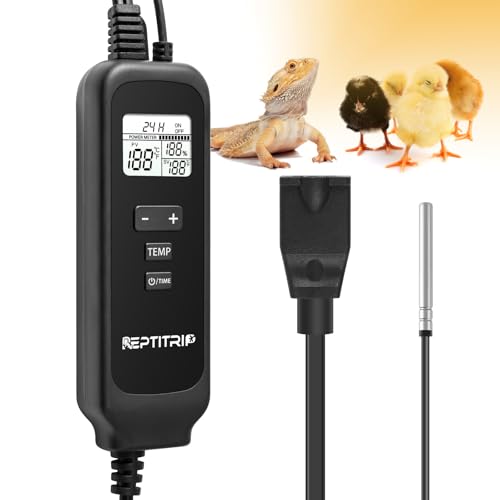
- NOTE: Place the temperature sensor in the reptile's basking area(or hot zone). If the current...
- This Reptile Dimming Thermostat Features a timer function, allowing the heat device maintain a...
- Reptile heating devices compatibility: heating mats, daytime heat lamps, infrared heat lamps, night...
One Quick Test That Saved My Setup
Here is the trick that gave me my biggest aha moment. Watch the thermostat’s indicator light for one full heating cycle, not just a few seconds. If it flicks on and off several times within a minute, your swing setting is too tight.
I timed ours with my phone and counted eleven clicks in sixty seconds. That number told me instantly it was a settings problem, not a broken unit. Once I widened the swing to two degrees, the clicks dropped to about one per cycle.
You can do this test right now with no tools at all. Just stand by the tank for a minute and count. It separates a real hardware fault from a simple adjustment, which saves you from buying parts you do not need.
Honestly, this one check would have saved me two heat mats and a lot of guessing. Try it before anything else, and you will likely find your answer in under five minutes.
My Top Picks for a Gecko Thermostat That Stops Rapid Switching
BN-LINK Digital Heat Mat Thermostat Temperature Controller — Simple and Reliable for Beginners
The BN-LINK Digital Heat Mat Thermostat is the one I reach for when someone just wants the clicking to stop without a big learning curve. I love that it has an adjustable temperature swing, which is exactly what fixes rapid cycling. It fits keepers with a single heat mat on a budget.
The trade-off is that it is an on-off unit, so you will still hear some clicking, just far less often.
- ✓ EFFORTLESS SET UP: Easily program your desired temperature or switch between Fahrenheit and...
- ✓ EASE OF MIND: Our digital temperature controller features a convenient hanging tab and a bright...
- ✓ RUGGED CONSTRUCTION: This thermostat plug outlet is built for durability and features a sensor...
CAVACHEW Dimming Reptile Thermostat PID Controller — My Pick for Silent, Steady Heat
The CAVACHEW Dimming Reptile Thermostat PID Controller is what I would buy if quiet, steady warmth matters most to you. It dims the heat source smoothly instead of switching it fully on and off, so there is basically no clicking at all. It suits keepers running a bulb or a deep heat projector.
The honest downside is the higher price and a slightly fussier setup, but for me it was worth it.

- Efficient & Reliable Temperature Controller: CAVACHEW dimming reptile thermostat adopting advanced...
- Unique Thermostat for Reptiles: CAVACHEW digital thermostat has a memory function, which can restore...
- Multiple Usage: This reptile thermostat can be used for temperature control of heat lamps, heat...
Conclusion
The single most important takeaway is that rapid switching usually comes down to probe placement or a swing setting that is too tight, not a broken thermostat.
Go stand by your gecko’s tank for one minute right now and count the clicks — if you hear more than a few, move that probe off the heat source and widen the swing before you buy anything new.
Frequently Asked Questions about Why Does My Gecko Thermostat Keep Switching on and Off Rapidly?
Is it normal for a gecko thermostat to click on and off every few seconds?
No, clicking every few seconds is not normal and usually points to a temperature swing set too narrow. A healthy setup should cycle roughly once every few minutes, not constantly.
In my experience, this rapid clicking almost always traces back to the probe reading the heat source instead of the tank air. Widening the swing setting fixes it fast.
Can a bad probe cause my thermostat to short-cycle?
Yes, a failing or misplaced probe is one of the most common causes of short-cycling. When the probe reads false temperature spikes, the thermostat reacts by switching constantly.
Test it by moving the probe to your gecko’s basking spot and watching the indicator light. If the clicking continues, the probe itself may need replacing.
What is the best gecko thermostat for someone who wants silent, steady heat?
A dimming thermostat is the best choice for silent, steady heat because it adjusts power smoothly instead of switching fully on and off. I recommend the CAVACHEW Dimming Reptile Thermostat PID Controller for this exact reason.
It suits keepers running a bulb or deep heat projector who are tired of constant clicking. If you want the quietest option, this is what I would grab first.
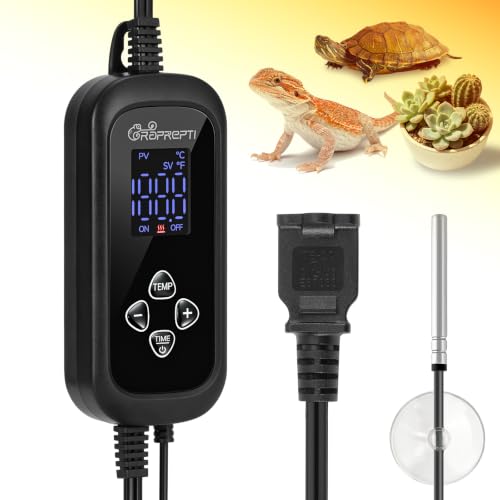
- 1-24H Auto Daily Cycle Timer:Freely set your preferred ON duration (1-24 hours). The first ON period...
- Safe & Reliable:High-precision sensor for accurate real-time temperature monitoring and automatic...
- Precise PID Reptile Thermostat Control: Advanced PID technology ensures consistent temperatures up...
Which gecko thermostat won’t let me down when I’m on a tight budget?
The BN-LINK Digital Heat Mat Thermostat is your best bet on a tight budget, and it costs far less than dimming models. It still gives you an adjustable swing, which is the key fix for rapid cycling.
It fits keepers with a single heat mat who just want the clicking to slow down. For a simple, affordable start, this is the one I sent my sister to buy.

- Socket S1 turns on and off according to the set time. Socket S2 turns on and off based on the set...
- Timer & Thermostat: Reptile thermostat, equipped with two independently operating sockets. Socket S...
- Timing Mode: The reptile thermostat is equipped with three customizable timing programs for Socket...
Does the wattage of my heat mat affect thermostat cycling?
Yes, a mismatched wattage makes cycling worse because the thermostat cannot control the heat smoothly. An undersized unit works too hard, while an oversized one overshoots the target temperature.
Check that your thermostat’s rated wattage covers your heat mat or bulb. Matching them keeps the temperature steady and extends the life of both pieces.
How do I stop my gecko thermostat from switching on and off so fast?
Start by moving the probe to the basking spot and widening the temperature swing to two or three degrees. These two changes fix most rapid cycling within minutes.
If that does not help, check the wattage match and consider a dimming thermostat. In my experience, those steps solve the problem without buying a whole new setup.