
Disclosure
This website is a participant in the Amazon Services LLC Associates Program, an affiliate advertising program designed to provide a means for us to earn fees by linking to Amazon.com and affiliated sites.
A small digital thermometer made for reptile tanks can be placed at the hot end of a tarantula enclosure, right above the substrate, to read the warmest spot. These units usually come with a probe or a stick-on body, and they work fine in a spider tank with a few small adjustments.
I mount mine a couple of inches above the substrate on the warm side, then check the cool side too, since tarantulas move around to pick their comfort zone. A cheap probe thermometer taped near the hide gives me the reading that actually matters.
Stop Guessing Your Tarantula’s Heat
Tarantulas need steady warmth, and a wrong reading can stress them fast. Cheap analog gauges drift, so you crank the heat and cook your spider. The Vodolo Digital Reptile Thermometer Humidity Gauge 2PCS gives you two accurate digital sensors, so you can place one at each end of the tank and trust the numbers you see.
This is the exact gauge I use in my tarantula tanks, and it ended the guesswork for good: Vodolo Digital Reptile Thermometer Humidity Gauge 2PCS
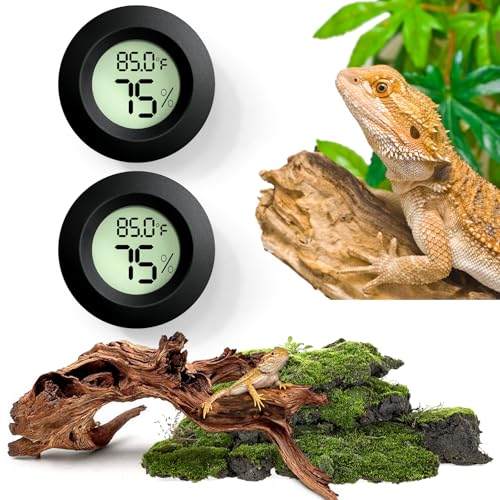
- Precision Health Guardian: Your reptile pets are very sensitive to temperature and humidity, and...
- Comprehensive Monitoring Experience: With the purchase of this kit, you will receive two humidity...
- Easy to Read and Operate: The LED screen clearly displays the temperature, making it easy to read...
Why Getting the Temperature Right Matters for Your Tarantula
I learned this the hard way with my first tarantula. I trusted a stick-on gauge that read a cozy 78 degrees, but my spider kept climbing the walls and refusing food. A keeper friend told me to check the actual surface where she sat, and it was barely 68 degrees.
That gap between what a thermometer says and what your tarantula actually feels is the whole problem. A wrong reading can slowly stress a spider for weeks before you notice anything is wrong.
Signs Your Tarantula Is Too Cold or Too Hot
Tarantulas can’t tell you they’re uncomfortable, so they show it through behavior. In my experience, these are the clues that something is off:
- Constant climbing or hanging on the lid, which often means the floor is too warm
- Refusing food for weeks when the tank used to be fine
- Burrowing deep and staying hidden for long stretches
- Sitting pressed against the water dish or a cool corner
A frustrated kid watching a pet that won’t eat is heartbreaking. We spent money on a fancy heat mat too, only to find it was cooking one corner while the rest stayed cold.
Where a Gecko Thermometer Fits In
Gecko thermometers work well for tarantulas because they measure small, tight spaces. The trick is placing the probe where your spider actually spends its time, not where the wall looks tidy.
How to Place a Gecko Thermometer in a Tarantula Enclosure
Honestly, this is what worked for us after a few messy tries. The placement matters more than the gadget itself, so take five minutes and do it right the first time.
Step-by-Step Setup That Actually Works
Start by picking your warm side, usually under the heat source. Then follow these steps:
- Stick the main unit on the outside wall, away from any heat mat
- Run the probe down inside the tank, two inches above the substrate
- Point the probe tip right over the spot where your tarantula sits
- Let it sit for an hour before you trust the number
I also keep a second cheap gauge on the cool side. That way I know the whole range, not just one corner.
Common Mistakes I Made So You Don’t Have To
My biggest mistake was taping the probe right against the glass. Glass reads warmer than the air your spider lives in, so that number fooled me for weeks.
Another one: burying the probe in wet substrate. Damp coco fiber pulls the reading down and makes you think the tank is colder than it really is.
Keep the probe dry, keep it near the hide, and check it after every substrate change. Tarantulas don’t need perfect numbers, but they do need steady ones.
You lie awake wondering if that silent tank is too cold, and a bad reading can cost you a pet you’ve grown attached to. Stop guessing and grab the probe thermometer I sent my sister to buy:

- Highly Accurate: The thermo-hygrometer has a very fast response time, measuring the temperature and...
- Rechargeable Thermometer and Hygrometer: Unlike traditional thermometers that require frequent...
- Always Display Mode: This thermometer for reptile tank has a built-in battery. Each time you touch...
What I Look for When Buying a Gecko Thermometer for a Tarantula Tank
After buying a few duds, I now know exactly what matters. Here are the things I check before spending a dime.
A Probe on a Wire, Not Just a Stick-On Dial
Stick-on dials read the glass, not the air where your tarantula lives. A probe on a wire lets you place the sensor right where it counts. In my experience, that one feature prevents most bad readings.
Fast Response Time
Some units take ten minutes to settle on a number. That’s annoying when you’re spot-checking after a heat mat change. A thermometer that updates in under a minute keeps you from standing there guessing.
A Clear, Simple Display
You shouldn’t need a manual to read the screen. Big numbers and no confusing menus win every time. My kid can check ours in two seconds, which honestly makes tank duty easier for everyone.
Memory for Highs and Lows
This one surprised me. A unit that remembers the day’s high and low tells you what happened overnight. That matters, because a tank can spike at 3 a.m.
While you’re asleep and you’d never know.
The Mistake I See People Make With Tarantula Thermometer Placement
The biggest mistake is measuring the heat source instead of the spider. People tape the probe right against the heat mat or the glass above it, then panic when it reads 95 degrees.
Your tarantula isn’t sitting on the mat. It’s sitting on the substrate, often a few inches away, where the air is much cooler. So the scary number on your screen has nothing to do with your spider’s real world.
What to do instead: place the probe two inches above the substrate, directly under the heat source, and let it settle for an hour. That reading tells you the warmest spot your tarantula can actually reach. Then check the cool side too, so you know the full range it can choose from.
You keep second-guessing every reading, worried your spider is silently suffering while you sleep. Take the guesswork out and use the probe thermometer that finally worked for us:
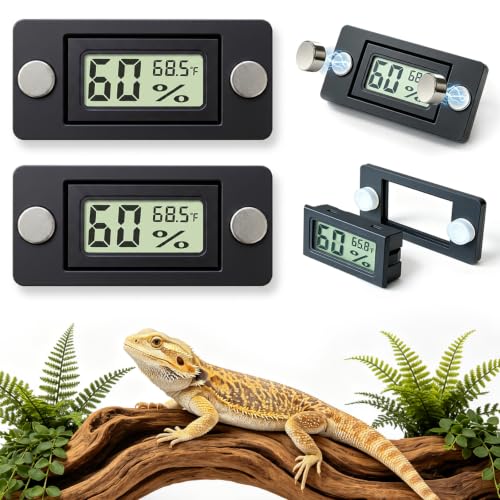
- 🦎【𝐌𝐀𝐆𝐍𝐄𝐓𝐈𝐂 𝐌𝐎𝐔𝐍𝐓 𝐃𝐄𝐒𝐈𝐆𝐍】: Strong...
- ...
- 🦎【𝐂𝐎𝐌𝐏𝐀𝐂𝐓 & 𝐏𝐄𝐓-𝐒𝐀𝐅𝐄 𝐒𝐈𝐙𝐄】: Thermometer...
One Trick That Made My Readings Finally Make Sense
Here’s the tip that changed everything for me: check your thermometer at the same time every day. Temperature swings in a tarantula tank follow a pattern, and once you see that pattern, you stop panicking over single numbers.
I check ours every morning before work and again around dinner. After a week, I knew our tank ran a few degrees cooler at night, which is totally normal and actually good for tarantulas.
This also tells you whether your heat source is doing its job. If the morning and evening readings barely differ, your setup is stable. If they swing wildly, you’ve found the problem before your spider pays for it.
Write the numbers down in a notebook or your phone. It sounds old-school, but a simple log turns guesswork into real knowledge about your specific enclosure.
My Top Picks for Setting Up a Gecko Thermometer in a Tarantula Enclosure
TeqyAqs Mini Digital Humidity Meter Thermometer 6-Pack — Great for Checking Every Corner at Once
I grabbed the TeqyAqs Mini Digital Humidity Meter Thermometer 6-Pack because I wanted readings on both sides of the tank plus a spare for my kid’s gecko setup. The six-pack is perfect for keepers with several enclosures, and the tiny size fits tight spots. The trade-off is that these read the air where they sit, so you still need to place them low and near the hide.

- 【2-in-1 Temperature and Humidity Meter】: The TeqyAqs mini digital temperature humidity meters...
- 【Wide Testing Range】: Temperature measuring range: -58℉-158℉, humidity measuring range...
- 【High Precision Display】: Mini digital electronic thermometer hygrometer, high measurement...
PEOT.SSHEE 2 Pack Magnetic Reptile Thermometer Hygrometer — Best for Quick, Tool-Free Placement
The PEOT.SSHEE 2 Pack Magnetic Reptile Thermometer Hygrometer is what I recommend when you want to move the gauge around without fighting tape. The magnets hold firm on most glass and plastic tanks, and two units cover both the warm and cool sides. The honest catch is that magnets won’t stick to wooden enclosures, so check your tank material first.
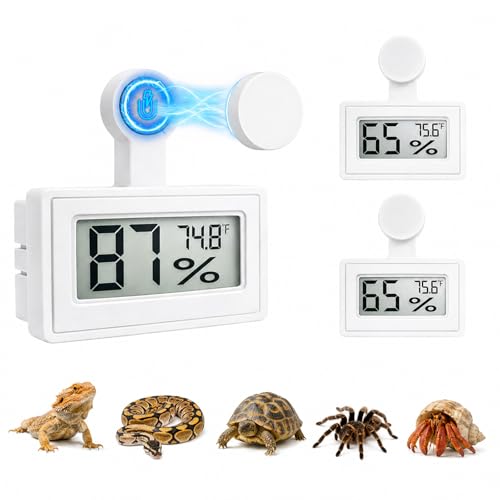
- Magnetic Mount for Glass Tanks – Easy to attach and easy to move, this magnetic reptile...
- Fast and Accurate Readings – Built with a high-sensitivity sensor chip, this reptile thermometer...
- Top-Front Placement for Easier Viewing – Unlike gauges placed on the substrate, this reptile tank...
Conclusion
The one thing that matters most is placing your probe where your tarantula actually sits, not where the glass feels warm.
So go move your probe right now — drop it two inches above the substrate on the warm side, wait an hour, and see what number you get. That one small change might be the reason your spider finally settles in.
Frequently Asked Questions about How Do I Set up a Gecko Thermometer for a Tarantula Enclosure?
Can I use a gecko thermometer for a tarantula enclosure?
Yes, a gecko thermometer works fine for a tarantula enclosure because both animals need the same kind of small, tight temperature readings. The device doesn’t care what species lives in the tank.
What matters is placement, not the label on the box. Put the probe or sensor where your tarantula actually sits, and the reading will be useful.
Where should I place the thermometer probe in a tarantula tank?
Place the probe two inches above the substrate on the warm side, directly under the heat source. That spot shows the warmest area your tarantula can reach.
Then add a second reading on the cool side so you know the full range. Tarantulas move around to pick their comfort zone, so both numbers matter.
What temperature should a tarantula enclosure be?
Most tarantulas do well between 75 and 85 degrees Fahrenheit on the warm side, with a cooler area in the low 70s. Exact needs vary by species, so check yours.
Steady numbers beat perfect numbers. A tank that swings wildly is more stressful than one that sits a few degrees off.
What is the best thermometer setup for someone who wants readings on both sides of the tank?
A multi-pack of small digital units is the simplest answer, since you can leave one on each side without moving anything. That setup gives you warm and cool readings at the same time.
The TeqyAqs Mini Digital Humidity Meter Thermometer 6-Pack covers both sides plus spares, and it’s what I grabbed for our two tanks.

- Accurate Temperature Monitoring: The Exo Terra thermometer is ideal in monitoring your reptile...
- Easy Installation: The thermometer is easy to mount on smooth surfaces with the adhesive dot on its...
- Easy to Read: Clear analog dial display makes it easy to read immediately.
Which thermometer won’t let me down when I need to move it around the enclosure?
A magnetic model is your best bet, because it sticks to glass and plastic without tape and repositions in seconds. Tape leaves residue and loses grip over time.
The PEOT.SSHEE 2 Pack Magnetic Reptile Thermometer Hygrometer is what finally worked for us, and the two-pack covers both temperature zones.

- 2-in-1 Measurement: Keeping accurate track of the temperature and humidity inside your reptile’s...
- Highly Accurate: You can easily switch between Fahrenheit and Celsius when reading the temperature...
- LED High Definition Display: This digital thermo-hygrometer from PAIZOO has an easy to read LED...
Why does my thermometer read high even though the tank feels fine?
Your probe is probably touching the glass or sitting too close to the heat mat. Glass and mat surfaces run much warmer than the air your spider breathes.
Move the probe away from the wall and let it settle for an hour. In my experience, that alone drops the reading by several degrees.