
Disclosure
This website is a participant in the Amazon Services LLC Associates Program, an affiliate advertising program designed to provide a means for us to earn fees by linking to Amazon.com and affiliated sites.
Certain low-cost heat pads use thin foam or cardboard insulation that can overheat, while quality brands use sealed, fire-resistant materials with thermostats. Models lacking a built-in thermostat or a listed safety certification pose the highest fire risk.
I always check for a UL or ETL mark and a thermostat before buying any heat pad. I also place my pads on a hard surface, never fabric or carpet, since trapped heat is what actually starts fires.
Heat Pads That Won’t Burn Your Reptile
Cheap heat pads often run too hot with no way to control them. That means burned bellies, cracked glass, and real fire risk in your setup. The REPTI ZOO 8×12 pad has a built-in adjustable thermostat, so you set the exact temperature your reptile needs. No guessing, no dangerous spikes, no worrying while you’re at work.
This is the one I use in my own enclosure to stop the overheating worry: REPTI ZOO 8×12 Reptile Heat Pad 24W Adjustable Thermostat

- 【Rapid Heating Performance】: The 24W 8 X 12 Reptile Heat Pad utilizes advanced carbon fiber...
- 【Adjustable Temperature Control】: Equipped with a wide-range thermostat, this reptile heat mat...
- 【Durable and Waterproof】: The PVC surface of our heating pad is not only waterproof but also...
Why Insulated Heat Pads and Fire Hazards Matter for Your Reptile Setup
A cheap heat pad is not just a bad buy. It is a fire sitting under your pet’s tank while you sleep. I learned this the hard way years ago.
My son’s first leopard gecko tank sat on a wooden shelf in his room. The pad I grabbed online had no thermostat and thin foam backing. One night I touched the shelf and it was hot enough to sting my hand.
What Happens When a Heat Pad Has No Thermostat
Without a thermostat, a pad keeps climbing in temperature with no off switch. The insulation layer is what traps that heat against your shelf, floor, or table. Over time, that trapped heat can char wood and melt plastic.
- Foam-backed pads can smolder against fabric or carpet
- Uncertified models often skip thermal fuses entirely
- Stacked tanks trap heat between pads and surfaces
The Real Cost of Choosing the Wrong Brand
I once replaced three cheap pads in one year. That money added up fast, and each one ran hotter than the last. My daughter cried when her first gecko got too cold during a power flicker because the pad had already failed.
In my experience, the stress is worse than the cost. You worry every time you leave the house. A pad with real insulation and a built-in safety cutoff removes that worry completely.
How to Spot Insulated Reptile Heat Pads That Are Fire Hazards
Honestly, most fire hazards are easy to spot once you know what to look for. I check every pad before it goes under a tank now. It takes about thirty seconds.
Check the Insulation and Backing Material
Flip the pad over and look at the back. A safe pad has a sealed, smooth surface with no exposed foam or cardboard. If you can peel the layers apart with your fingernail, that pad is a hazard.
Look for a Thermostat and Safety Certification
A pad without a thermostat or a UL/ETL mark is a gamble. These two things are your only proof that someone tested it for heat limits. I will not plug in a pad that has neither.
- A UL or ETL logo printed on the pad or plug
- A built-in thermostat or a separate controller
- A flat, sealed backing with no loose foam
- Clear wattage and size matching your tank footprint
Watch Where You Place It
Even a good pad can overheat on carpet, fabric, or a soft blanket. I always set tanks on hard, heat-safe surfaces like tile or a solid wood board. That single habit has saved us more than once.
You already know that awful feeling of touching a hot shelf and wondering if tonight is the night something goes wrong. Stop guessing with uncertified pads and grab the ones I sent my sister to buy for her bearded dragon tank:
the ones I sent my sister to buy

- GREAT UTILITY: The BN-LINK Heating Pad for Reptiles is great for keeping your reptile tank warm, but...
- ENERGY EFFICIENT AND SPACE-SAVING: The BN-LINK Heating Pad is both compact and packs a punch. The...
- EASY SETUP: It is suitable for any glass terrarium and all you gotta do is pull it out of the box...
What I Look for When Buying a Reptile Heat Pad
After years of trial and error, I keep it simple. Four things decide whether a pad comes home with me.
1. A Built-In Thermostat or a Controller
This is the single most important feature. A pad that can regulate its own temperature will not keep climbing until something melts. I once watched a cheap pad hit 120 degrees with no cutoff at all, and that was the last time I bought one without a thermostat.
2. A Sealed, Fire-Resistant Backing
Run your fingers along the back of the pad. It should feel smooth and solid, like a sealed plastic sheet. If you feel soft foam or paper layers, put it back, because that material is what traps heat and smolders.
3. The Right Size for Your Tank
A pad should cover about a third of your tank’s floor, no more. Too big and it heats the whole enclosure, leaving your reptile with no cool spot to escape to. I measure my tank base before I order anything.
4. A Real Safety Certification
Look for a UL or ETL mark on the pad or its plug. That logo means an independent lab tested it for fire and electrical safety. No mark, no purchase, no exceptions in my house.
The Mistake I See People Make With Reptile Heat Pad Safety
The biggest mistake I see is trusting the word “insulated” on the box. It sounds safe, so people skip every other check. I did this myself for years.
Here is the truth I wish someone had told me earlier. Insulation is not the same as fire resistance. A thick foam layer can be “insulated” and still smolder against wood, because nothing inside it ever shuts the heat off.
Instead, do this. Look for a thermostat, a UL or ETL mark, and a sealed backing, in that order. Then place the pad on a hard, heat-safe surface.
If a listing shows none of those three things, walk away no matter how good the insulation sounds.
You should not have to lie awake wondering if a cheap pad is quietly cooking your shelf while your family sleeps. Skip the guesswork and get the one that finally worked for our gecko tank:
the one that finally worked for our gecko tank

- Durable Materials: Made of high-quality materials that it meets UL certification; Far-infrared...
- Intelligent Constant Temperature: This reptile heat pad can get well about 104℉(40℃) ; Use this...
- Easy to Set: Bottom mounting and the side mounting of the Reptile Heat Pad are also nice application...
The Cheap Trick That Catches a Bad Heat Pad in Seconds
Here is the tip that changed how I shop for heat pads. Plug the pad in for ten minutes on a hard surface before it ever touches your tank. Then touch the shelf underneath it, not the pad itself.
If the surface under the pad feels hot to your hand, that pad is dumping heat downward with nowhere to go. That is exactly how shelves char and fires start. A good insulated pad keeps most of its warmth on top where your reptile actually needs it.
I also unplug it and check the plug and cord for warmth. A warm cord means the wiring is undersized for the wattage. That is a fire waiting to happen, and no amount of insulation fixes it.
This test takes ten minutes and costs nothing. It has saved me from at least two pads I would have otherwise trusted. Do it before every new pad goes under a tank, and you will never wonder again.
My Top Picks for Which Reptile Heat Pad Brands Are Insulated and Fire Hazards
VIVOSUN Reptile Heating Pad 8×12 Inch Thermostat Combo — The One I Trust With a Thermostat Built In
VIVOSUN Reptile Heating Pad 8×12 Inch Thermostat Combo is the pad I recommend first because it comes with a thermostat right in the box. I love that I can set an exact temperature instead of guessing. It fits most 20 to 40 gallon tanks, though the cord is shorter than I would like.
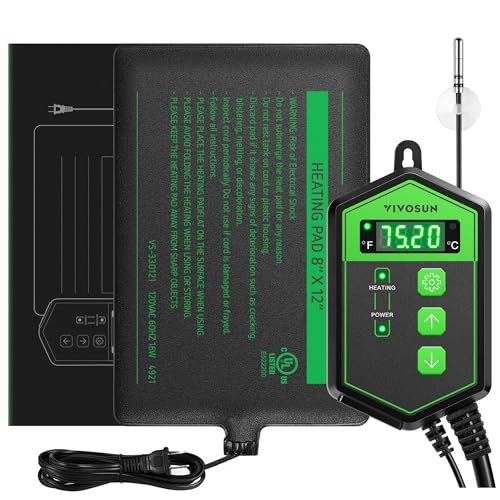
- Durable Materials: Made of high-quality materials that it meets UL certification; Far-infrared...
- Intelligent Constant Temperature: This reptile heat pad can get well about 104℉(40℃) ; Use this...
- Easy to Set: Bottom mounting and the side mounting of the Reptile Heat Pad are also nice application...
Exo Terra Heat Mat 8 Watt Small Reptile Terrarium Heater — Great for Small Tanks and Hatchling Setups
Exo Terra Heat Mat 8 Watt Small Reptile Terrarium Heater is my pick for small enclosures and hatchling tubs. I like that the low 8 watt draw stays gentle, and the sealed backing feels solid against a shelf. It is the perfect fit for a single small tank, but you will need a separate thermostat for full control.

- Efficient Heating For Your Reptiles: Keep your reptiles warm and comfortable with the Exo Terra Heat...
- Safe And Easy To Use: The Exo Terra Heat Mat is designed with safety in mind. The mat is made of...
- Versatile For All Terrariums: This heat mat is suitable for all types of reptile terrariums...
Conclusion
The one thing that matters most is a thermostat, because no amount of insulation can stop a pad that never shuts off.
Go flip your heat pad over right now and look for a UL or ETL mark and a sealed backing — it takes 30 seconds, and it might be the reason you finally sleep easy tonight.
Frequently Asked Questions about Which Reptile Heat Pad Brands Are Insulated and Fire Hazards?
Do all reptile heat pads come with a thermostat?
No, most cheap heat pads sold online do not include a thermostat at all. They plug straight into the wall and run at full power until you unplug them.
That constant full-power heat is what turns a pad into a fire risk. If your pad did not come with a controller, buy a separate thermostat before you use it.
How can I tell if my heat pad is insulated safely?
Look for a sealed, smooth backing with no exposed foam or cardboard layers. A safe pad feels solid, like one piece of plastic, when you run your fingers across it.
If the layers peel apart or you feel soft foam, that pad traps heat against your shelf. In my experience, those are the ones that char wood over time.
What is the best reptile heat pad for someone who needs to sleep without worrying about a fire?
The VIVOSUN Reptile Heating Pad 8×12 Inch Thermostat Combo is the one I trust most, because it includes a thermostat right in the box. You set the temperature once and it holds there on its own.
That built-in control is the difference between guessing and knowing. For anyone who wants peace of mind, these are what finally worked for us: what finally worked for us.

- GREAT UTILITY: The BN-LINK Heating Pad for Reptiles is great for keeping your reptile tank warm, but...
- ENERGY EFFICIENT AND SPACE-SAVING: The BN-LINK Heating Pad is both compact and packs a punch. The...
- EASY SETUP: It is suitable for any glass terrarium and all you gotta do is pull it out, and stick it...
Can I put a heat pad directly on carpet or fabric?
No, you should never place a heat pad on carpet, fabric, or a blanket. Soft materials trap heat underneath the pad with nowhere for it to escape.
I always set my tanks on tile or a solid wood board instead. That one habit removes most of the fire risk, even with a decent pad.
Which reptile heat pad won’t let me down when I need it for a small tank?
The Exo Terra Heat Mat 8 Watt Small Reptile Terrarium Heater is a solid choice for small enclosures, with a gentle 8 watt draw. It stays mild enough for hatchling tubs and single small tanks.
The trade-off is that it has no thermostat of its own, so you still need a controller. If you want a low-wattage pad that runs cool and safe, this is the one I’d grab: the one I’d grab.

- REPTILE HEATING PAD: Size: 8” x 12” ; Voltage: 120 volt; Power: 16 watt; Please read...
- GREAT UTILITY: Under tank heater ideal 24-hour primary or secondary heat source for tropical or...
- IMPORTANT: Reptile heat mat optional mounting on bottom or side of your terrarium. Rubber feet...
How often should I replace a reptile heat pad?
Replace a heat pad every one to two years, or sooner if the backing cracks or the cord feels warm. Heat cycles wear down insulation over time, even on good pads.
I check mine every few months for cracks, discoloration, or a hot cord. If anything looks off, I replace it right away instead of waiting.