
Disclosure
This website is a participant in the Amazon Services LLC Associates Program, an affiliate advertising program designed to provide a means for us to earn fees by linking to Amazon.com and affiliated sites.
Yes. High humidity can damage a gecko thermometer over time, mainly through corrosion, condensation, and moisture creeping into seals and seams. Most units survive short damp spells, but constant moisture speeds up wear on the electronics inside.
I learned this the hard way after a fogger soaked one of my enclosures for months. The display fogged up and the readings drifted. Now I dry the probe, check the seal, and keep the unit away from direct misting.
Stop Guessing Your Gecko’s Humidity
Cheap analog gauges fog up, stick, and drift after a few months in a damp tank. My readings stopped matching my other meter, and I couldn’t trust either one. This dual digital unit tracks temperature and humidity together on one clear screen, so you catch rising moisture before it becomes a problem.
This is the one I keep in every humid enclosure now, and it ended the guesswork for good: REPTI ZOO Reptile Terrarium Thermometer Hygrometer Dual

- The accurate measure of temperature and humidity in vivariums, hatchers, brooders, propagators, etc.
- Easy to read: uses different color-coded segments for easy reading.
- Easy to install: sticky pad on reverse allows it to be mounted on most surfaces.
Why Humidity Damage to a Gecko Thermometer Actually Matters
Here is the part that stings. A thermometer that drifts slowly does not announce itself. It just starts lying to you, day after day, while your gecko pays the price.
My son’s leopard gecko, Pepper, stopped eating for almost two weeks. We panicked. We changed feeders, moved hides, and lost sleep.
The whole time, our cheap hygrometer said the tank sat at a perfect 40 percent.
Wrong Readings Mean Wrong Care
A moisture-damaged sensor usually fails quietly. The numbers look normal, so you keep trusting them. Meanwhile, the real humidity in the tank could be far off from what the screen shows.
That gap matters because reptiles rely on us for everything. If the air is too wet or too dry, shed problems, breathing issues, and skin trouble can follow. In my experience, the animal shows symptoms long before the owner suspects the gauge.
The Money You Waste Without Noticing
I have replaced three units in two years because I stored them badly. That adds up fast. Worse, a broken reading can send you buying the wrong gear entirely.
- You buy a new mister when the old one works fine.
- You swap substrates chasing a problem that is not real.
- You pay a vet to solve a mystery your thermometer created.
The real cost is trust. Once a device fails in humid air, you stop believing every number it shows. That doubt makes daily care harder than it needs to be.
How to Protect a Gecko Thermometer from High Humidity
Honestly, prevention is easier than I expected. A few small habits kept our readings steady for over a year now. None of it costs much or takes real effort.
Simple Placement Changes That Help
Where you put the unit matters more than most people think. Keep it out of the direct misting path and away from the water bowl. I moved ours to the cool side, and the condensation problem basically vanished.
Mount it slightly above the substrate, not resting on it. Damp bedding wicks moisture straight into the housing. A little height makes a real difference.
Weekly Habits That Save Your Device
I check ours every Sunday during cleaning. It takes two minutes and catches problems early. Here is what I do:
- Wipe the casing with a dry cloth.
- Check the probe seal for cracks or gaps.
- Compare readings against a second gauge.
- Air-dry the unit if it feels damp.
If you see fog inside the display, act fast. That is moisture already inside, and it rarely gets better on its own. Drying it out quickly can save the whole unit.
You already know the sinking feeling of trusting a gauge that quietly lied while your gecko suffered. You do not need that worry again. What finally worked for us was a sealed, humidity-resistant unit we could actually trust:
the one I sent my sister to buy

- Accurate Temperature Monitoring: The Exo Terra thermometer is ideal in monitoring your reptile...
- Easy Installation: The thermometer is easy to mount on smooth surfaces with the adhesive dot on its...
- Easy to Read: Clear analog dial display makes it easy to read immediately.
What I Look for When Buying a Gecko Thermometer
After burning through a few bad units, I got picky. Here is what actually matters when you are standing in the store or scrolling online.
Sealed Housing and Probe Connections
Look for a unit where the seams and probe entry point feel tight and solid. Moisture gets in through the smallest gap, so a loose fit is a red flag. I squeeze the casing gently in my hand now before buying.
Accurate Humidity Range
Check that the hygrometer covers the range your species actually needs. A gauge that only reads general room humidity will not help inside a tropical tank. Match the range to your gecko, not to the label on the box.
Easy-to-Read Display
You will glance at this thing daily, sometimes in dim light. A clear, large display saves you squinting and second-guessing. I once returned a unit simply because I could not read it at night.
Replaceable Batteries and Simple Calibration
Skip anything with sealed batteries or a confusing reset process. You want to swap batteries fast and recalibrate in minutes. A quick salt test tells you if the readings hold up over time.
The Mistake I See People Make With Gecko Thermometers
The biggest mistake is assuming a thermometer is waterproof just because it sits in a damp tank. Most units are only splash-resistant, not sealed against constant humidity. I made this exact error and paid for it twice.
People also trust the first reading forever. They never check it again, never recalibrate, and never notice the slow drift. By the time the numbers are clearly wrong, the animal has already been living in the wrong conditions for weeks.
Do this instead. Test your unit against a second gauge once a month. Keep it out of direct mist, dry the casing after cleanings, and replace it the moment readings look off.
A cheap backup gauge costs little and saves you from a silent failure.
You lie awake wondering if the numbers on that screen are even real, while your gecko quietly struggles in the wrong conditions. That doubt is exhausting, and you deserve a reading you can finally trust. What finally worked for us was a sealed unit built for damp setups:
the ones I sent my sister to buy

- 【2-in-1 Temperature and Humidity Meter】: The TeqyAqs mini digital temperature humidity meters...
- 【Wide Testing Range】: Temperature measuring range: -58℉-158℉, humidity measuring range...
- 【High Precision Display】: Mini digital electronic thermometer hygrometer, high measurement...
A Cheap Trick That Saved My Thermometers
Here is the aha moment I wish I had years ago. You can test whether humidity is hurting your readings using a simple salt test at home. It takes an afternoon and costs almost nothing.
Mix a little table salt with water until it forms a thick paste. Seal it in a jar with your thermometer for about eight hours. A working hygrometer should settle near 75 percent, and if it reads way off, moisture has already messed with the sensor.
I run this test every few months now, and it caught a dying unit before it fooled me again. It also told me which units actually hold up in damp tanks. That single habit gave me more confidence than any spec sheet ever did.
You can also rotate two gauges and compare them side by side. When one starts drifting, you will spot it fast. Honestly, this one small routine changed how I care for my whole setup.
My Top Picks for a Gecko Thermometer That Handles Humidity
I have tested a handful of gauges in real damp tanks, and two of them earned a permanent spot in my setups. Here is exactly what I would buy and why.
BSRESIN Magnetic Reptile Thermometer Humidity Gauge — Sticks Anywhere and Reads Fast
BSRESIN Magnetic Reptile Thermometer Humidity Gauge is the one I reach for first because the magnetic mount lets me reposition it in seconds. I love that I can move it off the damp side without fuss. It suits keepers with glass or metal enclosures.
The trade-off is that the magnet needs a metal surface to hold well.
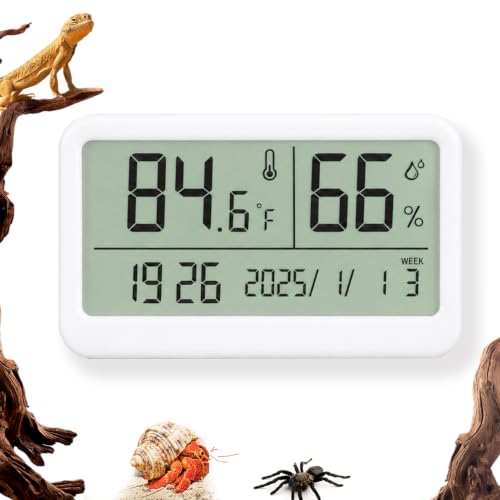
- Reptile Necessary: BSRESIN humidity thermometer can meet the need of Humidity and Temperature...
- Widely Apply for Reptile:The reptile thermometer and humidity gauge can be widely suitable for...
- Easy to Use: Rectangle LED screen digital display of reptile tank accessories can clearly display...
Exo Terra Reptile Terrarium Thermometer Celsius Fahrenheit — A Brand I Have Trusted for Years
Exo Terra Reptile Terrarium Thermometer Celsius Fahrenheit is my go-to when I want a familiar, reliable reading in both scales. I love that I can flip between Celsius and Fahrenheit without guessing. It fits keepers who want a simple, well-known option.
The honest downside is that it is not fully sealed, so I still keep it away from direct misting.
- Accurate Temperature Monitoring: The Exo Terra thermometer is ideal in monitoring your reptile...
- Easy Installation: The thermometer is easy to mount on smooth surfaces with the adhesive dot on its...
- Easy to Read: Clear analog dial display makes it easy to read immediately.
Conclusion
The one thing I want you to remember is that high humidity will slowly damage most gecko thermometers, but a few simple habits keep yours honest for years.
So go grab your thermometer right now, wipe the casing dry, and check the seal around the probe — it takes two minutes and it might be the reason your readings finally start making sense.
Frequently Asked Questions about Will High Humidity Damage a Gecko Thermometer over Time?
How long does it take for high humidity to damage a gecko thermometer?
Most damage shows up within three to six months of constant damp exposure. The moisture works slowly into the seals and electronics before anything looks wrong.
In my experience, the first sign is a foggy display or a reading that drifts a few points. Once that starts, the decline speeds up fast.
Can I still use a thermometer that got wet inside a humid tank?
Yes, but only if you dry it out right away and retest it. A unit that sat damp for days usually keeps drifting, even after it looks fine.
Run a salt test to confirm the humidity reading is still accurate. If it reads more than a few points off, replace it before you trust it again.
What is the best gecko thermometer for someone who needs it to survive a damp tropical setup?
A sealed, humidity-resistant gauge is your best bet, and the BSRESIN Magnetic Reptile Thermometer Humidity Gauge handles damp enclosures well. Its tight housing keeps moisture away from the sensor longer than most basic units.
I recommend it for keepers running misters or foggers daily. For a reliable option that held up in my own wet tanks, what finally worked is worth grabbing.

- Faster and Accurate Monitoring: Our reptile thermometer and humidity gauge use a built-in...
- Powerful Magnetic Mounting: This reptile thermometer features a strong magnetic back, allowing for...
- Long-Lasting Button Battery Power: Our reptile tank thermometer come with 2pcs button...
Which gecko thermometer won’t let me down when humidity stays high all year?
The Exo Terra Reptile Terrarium Thermometer Celsius Fahrenheit is a solid pick, and it gives you both Celsius and Fahrenheit on one clear display. That dual scale saves me from doing mental math during daily checks.
It fits keepers who want a trusted, well-known brand without overthinking it. For a gauge I keep coming back to, the ones I sent my sister to buy earned its spot.

- Precision Health Guardian: Your reptile pets are very sensitive to temperature and humidity, and...
- Comprehensive Monitoring Experience: With the purchase of this kit, you will receive two humidity...
- Easy to Read and Operate: The LED screen clearly displays the temperature, making it easy to read...
Does placing my thermometer away from the water bowl really make a difference?
Yes, moving it away from direct mist and standing water cuts moisture exposure a lot. Distance from the source slows how fast damp air reaches the sensor.
I moved mine to the cool, dry side of the tank and the condensation stopped. It is the easiest fix I have found, and it costs nothing.
How often should I check my thermometer for humidity damage?
Check it once a week, and do a full accuracy test once a month. Catching drift early is the difference between a working unit and a dead one.
Weekly checks take about two minutes during cleaning. That small habit kept my readings steady and saved me from replacing units over and over.